The order is ready. The amount looks affordable. You are a few taps away from buying.
This is a good time to stop for five minutes.
Preparation is easiest before a transaction creates deadlines, payment questions and an actual holding. The checklist below is designed to reveal mismatches while changing your mind is still simple.
Decide the amount before browsing
Set a maximum amount consistent with the purpose of the money and your wider finances. Do not increase it solely because the minimum order is larger than expected or a temporary offer encourages you to hurry.
There is no recommended first-investment amount in this guide. A sum that is small for one household may be essential for another. Use money you can afford to commit under the actual terms, including the possibility of loss or an inconvenient exit.
Check the concentration after the purchase, including other exposure to the issuer or group. Two different platforms do not create two different borrowers when the underlying issuer is the same.
Get the right account ready
For an exchange-based dematerialised investment, establish the required trading and demat arrangements through the chosen intermediary. For Retail Direct, follow the official RDG account-opening process. They are different custody routes; one account does not automatically display the other’s holdings.
Follow current KYC instructions and supply information through the official process. The SEBI KYC FAQ explains the framework, while the service you use should provide the current operational steps. Keep your name, PAN and account details consistent across the relevant records.
Do not rely on a copied list of acceptable documents from an old video. If something fails, use official support rather than sharing an OTP or letting an unknown person take remote control of your device.
Check the receiving bank account
Know which bank account funds purchases and receives payments. Verify its details and keep it active. A correctly chosen bond cannot fix an incorrect account number or an outdated record.
If you change banks later, update the relevant account records and verify the change before the next payment date. Keep proof of the request and confirmation. This small administrative task can prevent a payment-query problem from becoming harder to diagnose.
Record nomination and access information
Complete the nomination or applicable choice through your account’s current process. NSDL’s online nomination guidance describes one route for eligible accounts; Retail Direct has its own account provisions.
Nomination is part of organising your affairs, not a replacement for understanding inheritance or estate-planning requirements. Keep a safe record of where the accounts are held and whom your family can contact. Do not store passwords or OTPs in an ordinary shared worksheet.
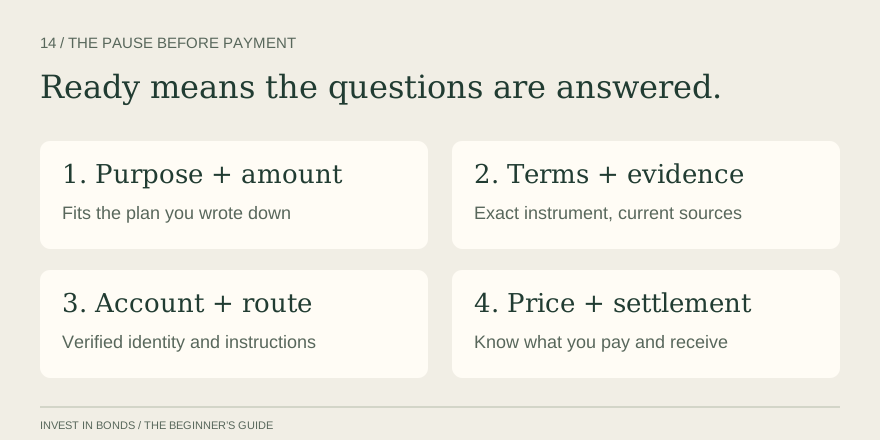 Complete the checks before authorising the payment. View full-size diagram
Recheck the instrument, not just the issuer
Match the ISIN on your research note, order screen and supporting documents. Confirm the series, payment frequency, remaining term, options and minimum quantity. A search result can place similar instruments next to one another.
Check that the rating and disclosures you read are still the latest available. If something significant has changed since your research, revisit the decision. A completed checklist is not permanent approval for every later quote.
Read the final cash-flow summary
Confirm the clean price or quoted amount, accrued interest, charges and final payable amount. Record the settlement date and the date of the first payment you expect to receive. Understand any record-date or entitlement issue relevant to that payment.
Then check your assumptions about the exit. If a call is possible, what happens if it is exercised and what happens if it is not? If you need to sell before maturity, what process would you follow? If there is no current bid, recognise the uncertainty rather than writing a hypothetical sale price into your plan as a fact.
Verify the official route one more time
Use the verified website or app and inspect the payment instructions within the authenticated transaction. Match the intermediary’s legal identity against the relevant official register. The SEBI OBPP page links to current exchange lists for that category.
Be wary of anyone making the transaction contingent on secrecy, remote device access, a personal transfer or a guaranteed return outside the documents. You can end a conversation without completing an investment.
Use a final six-question pause
- Can I explain what I am buying and who owes the payments?
- Does the amount and holding period fit the job for this money?
- Have I checked the terms, current disclosures and relevant risks?
- Do I understand the final amount payable and expected receipts?
- Have I verified the official payment route and where the security will be held?
- Do I know how to confirm settlement and seek help if something is wrong?
An unanswered question is a reason to pause, not a box to tick optimistically. If the opportunity disappears while you clarify it, another opportunity may be more appropriate than a transaction you did not understand.
Being ready to invest includes being ready to decide against the purchase.
Prepare a transaction folder
Create a place for the order confirmation, payment acknowledgement, allotment or trade record, holding statement and original documents. Add a calendar reminder to check settlement. This takes little time and changes the first purchase from a series of screenshots into a traceable process.
With preparation complete, the next two chapters follow government and corporate purchases separately. Use the path relevant to you and read the other when you want to understand the differences.