You have researched a corporate bond and decided it may fit your plan. The remaining task is to turn that research into the correct transaction.
This chapter follows two routes: applying in a public NCD issue and buying an existing bond. It does not recommend an issuer or platform. The examples are hypothetical, and exact operational requirements must be checked with the issue documents and current intermediary process.
Begin with a verified intermediary
Identify the legal entity you will transact through and the service it is authorised to provide. For an OBPP, match it against the exchange lists linked by SEBI. Check the official website, contact details and grievance process.
Then verify the security itself. The intermediary’s registration does not establish the issuer’s ability to repay or the bond’s suitability. These are separate checks that remain separate all the way to the order screen.
Route one: a public NCD issue
Obtain the current prospectus and applicable issue documents from the issuer, exchange or authorised issue channels. Read the risk factors and the specific series terms. Public issues may offer several series with different coupon frequencies, tenors or repayment patterns.
Do not choose only by the largest coupon in the table. Match the series to your cash-flow needs and compare the actual yield or effective return on a consistent basis. An accumulated payment at maturity and a periodic payout are different patterns.
Before applying, record the issuer, series, application category, quantity, face amount, payment option and total application amount. Check current eligibility, minimum application, allotment method and issue dates. Avoid importing a minimum denomination from a different issue or an older general FAQ.
Submit the application through the permitted process
Follow the application and funding method specified for that issue and the intermediary you are using. Where funds are blocked under the stated process, distinguish a block from a completed debit. Where an authorisation is required, review its details inside the official service.
Retain the application reference. After closure and allotment, check the result, any debit or release of unused funds, and credit of the correct securities to your demat account. A valid application can receive less than the amount requested under the applicable allotment conditions.
Do not make a second application simply because you cannot immediately see the first. Establish the first application’s status and the rules on multiple applications before taking further action.
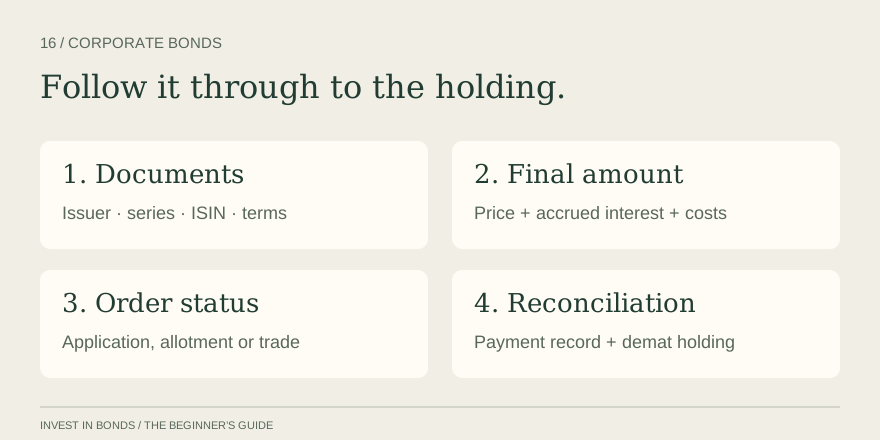 An application, an executed trade and a settled holding are different stages. View full-size diagram
Route two: a secondary-market purchase
For an existing bond, the original issue document remains important, but the current trade has its own price and settlement details. Review later disclosures, updated ratings and any amendments to the terms.
Ask for the quote for the quantity you intend to buy. Identify whether the amount is per unit, per ₹100 face value or expressed another way. Confirm whether accrued interest is included and which charges will be added. If the process uses a quote request, read the validity and acceptance conditions. NSE’s RFQ FAQ describes the market mechanism.
Read a final order in rupees
Consider a fictional order for two units, each with ₹10,000 face value. The clean price is ₹10,050 per unit, accrued interest is ₹120 per unit and total charges are ₹30.
| Component | Calculation | Amount |
|---|---|---|
| Clean consideration | 2 × ₹10,050 | ₹20,100 |
| Accrued interest | 2 × ₹120 | ₹240 |
| Total charges | Assumed for the example | ₹30 |
| Cash payable | Sum of the above | ₹20,370 |
This is an arithmetic illustration, not a typical quote or fee schedule. Compare that ₹20,370 outflow with the actual future receipts, rather than calculating return from the ₹20,000 face amount alone. Taxes may further affect the outcome.
Before accepting, match the ISIN, issuer, series, quantity and settlement date. If a field differs from your research sheet, stop and resolve it. The correct issuer with the wrong series is still the wrong investment.
Pay only through the official instructions
Review the payment destination within the authenticated transaction process. Preserve the acknowledgement and trade reference. Do not rely on a beneficiary account sent by an unknown person or in a forwarded message.
Understand whether you have submitted an order, accepted an executable quote or completed a trade under the applicable workflow. Check status if you are unsure. An attractive price that was visible earlier may no longer be available, and an unfilled order should not be treated as a holding.
Reconcile the settled security
After settlement, compare the trade or allotment record with your independent depository/DP holding record. Check the ISIN and quantity, not just the total portfolio value. NSDL’s CAS guide explains one consolidated source of account information; use the statement and alerts appropriate to your own depository and participant.
Keep the final payment breakdown and note any difference from the estimate. If settlement is delayed or the holding is wrong, raise a specific query through the official intermediary route. Include the reference and relevant dates, while protecting sensitive credentials.
The platform’s order screen can be useful, but an independent holding record strengthens the reconciliation. You should be able to explain where the securities are held if you stop using the platform’s app.
Set up the holding record immediately
Save the final terms, purchase cost, rating rationale and latest disclosures. Add the next interest date, maturity, relevant call or put dates and trustee contact. If the bond repays principal in instalments, record that schedule rather than one final number.
Also record why you bought it and what would prompt a review. This note helps separate a later change in facts from a temporary reaction to a market-price movement.
Buying the intended security is a sequence of checks, not a single button.
The first corporate purchase is now complete as a process. The next chapter concerns the quieter work that follows: receiving, reconciling and monitoring the investment you actually own.